
I remember the first time it happened. We’d had guests over, a mountain of dishes, and the dishwasher was running a cycle. Hours later, I opened it, expecting gleaming plates and glasses. Instead, a murky swamp stared back at me. Half-cleaned dishes, a lingering odor, and a growing sense of dread. Sound familiar? Let’s dive into why your dishwasher might be acting up, and more importantly, how to get it back to doing its job: keeping your dishes sparkling.
Why Dishwashers Clog and What’s the Big Deal?
A clogged dishwasher isn’t just a nuisance; it can lead to a host of other problems. The primary issue is, of course, dirty dishes. But the water that’s not draining properly can also lead to:
- Mold and Mildew: Stagnant water is a breeding ground for these unwanted guests.
- Bad Odors: The smell of trapped food waste is unpleasant and can spread throughout your kitchen.
- Reduced Efficiency: A clogged dishwasher can’t clean as effectively, leading to repeated cycles and higher energy bills.
- Potential Damage: Water can leak and damage your flooring or surrounding cabinetry.
So, what causes these clogs? Well, it’s usually a combination of factors, most stemming from things we often overlook.
Common Mistakes Homeowners Make (and How to Avoid Them)
Over the years, I’ve learned that most dishwasher problems are preventable. Here are some of the most common mistakes, and how to avoid them:
1. Pre-Rinsing Dishes (Too Much or Not Enough!)
There’s a fine line here. The general rule is: scrape, don’t pre-rinse. Modern dishwashers are designed to handle some food particles. Rinsing every single thing you put in the dishwasher is a waste of water and can actually hinder the dishwasher’s ability to clean effectively because the detergents need something to latch onto. On the other hand, not scraping off *enough* food is the biggest culprit for clogs. Think of it like this: big chunks of food = instant clog. So, scrape off the big stuff – bones, large food particles, and anything that’s clearly visible – before loading. A quick scrape is all it takes.
2. Overloading the Dishwasher
We’ve all done it – trying to cram as many dishes as possible into a single load. But overcrowding can block water spray and prevent dishes from getting properly cleaned. Also, when dishes are packed too tightly, they can prevent the detergent from circulating correctly. Make sure that the spray arms can rotate freely and that water can reach all surfaces of the dishes. Give your dishes some breathing room.
3. Improper Loading
Where you put things matters. Plates should face the center of the dishwasher, allowing water to reach all surfaces. Cups and bowls should be placed upside down to prevent water from pooling inside. Make sure taller items don’t block the spray arms. There’s a science to loading a dishwasher, and learning it can save you a lot of headaches (and rewashing).
4. Using the Wrong Detergent or Too Much
Using the wrong type of detergent or using too much detergent can leave a residue that can clog the spray arms and filter. Make sure you use a detergent specifically designed for dishwashers, and follow the manufacturer’s instructions for the correct amount. Powders, gels, and pods all have different dosing instructions, so check your detergent’s label.
5. Neglecting the Filter
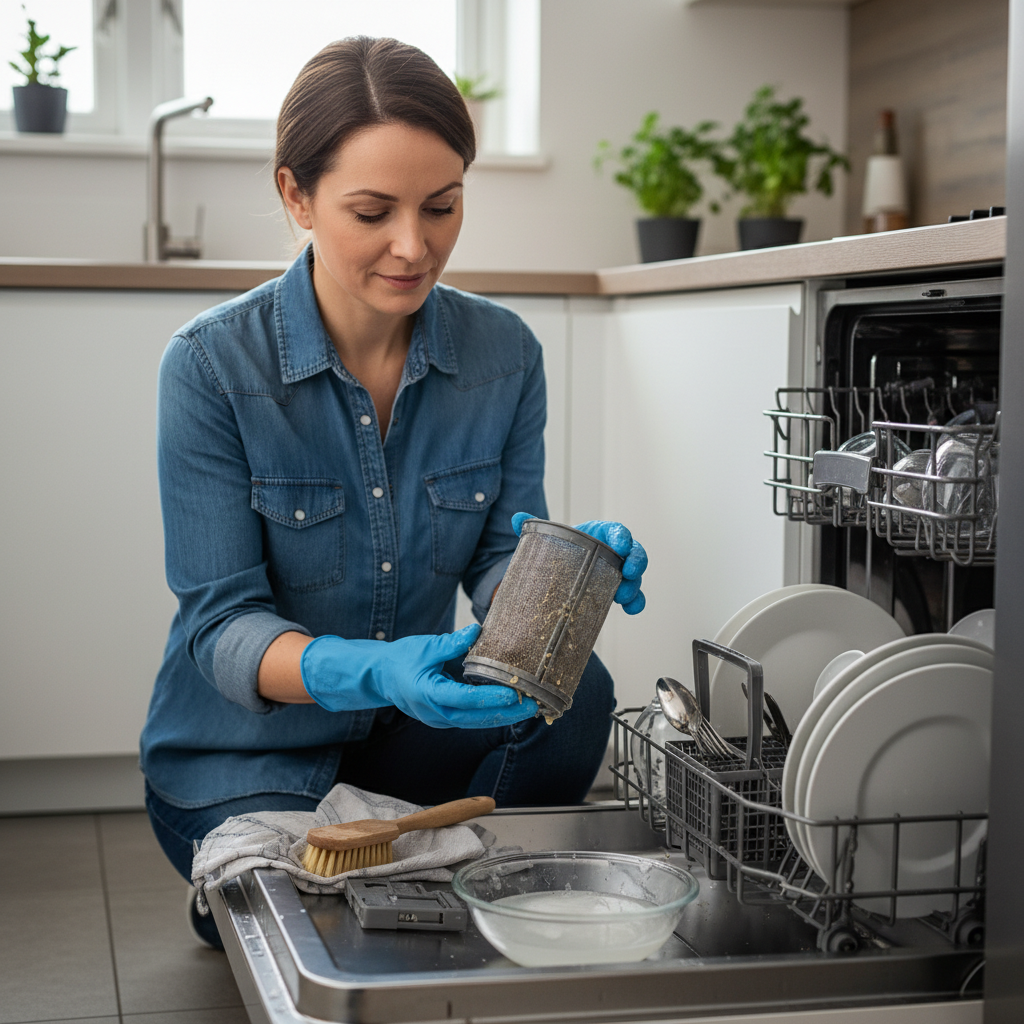
This is probably the most common (and overlooked) maintenance task. Most dishwashers have a filter that traps food particles. This filter needs to be cleaned regularly, usually about once a month, but potentially more often if you cook a lot or have a large family. Refer to your dishwasher’s manual on how to do this as each model can vary slightly, but it’s usually a simple process of removing the filter, rinsing it under hot water, and replacing it. Don’t skip this step!
6. Ignoring Unusual Noises or Poor Performance
Listen to your dishwasher. Is it making strange noises? Is it not cleaning as well as it used to? These can be early warning signs of a problem. If your dishes are coming out with spots or residue, it could indicate a clog or a problem with the water supply. Addressing these issues early on can prevent them from turning into bigger, more costly repairs.
Simple Maintenance & Care Tips for a Happy Dishwasher
Maintaining your dishwasher doesn’t have to be a chore. Here are some simple, regular tasks that will keep it running smoothly:
- Clean the filter: As mentioned above, make this a monthly (or more frequent) habit.
- Run a cleaning cycle: Use a dishwasher cleaner (you can find these at any hardware or home goods store) or a mixture of white vinegar and baking soda to remove residue and buildup. Run an empty cycle with the cleaner once a month.
- Check the spray arms: Make sure the spray arms are free of debris and can rotate easily. If you see clogged holes, use a toothpick or wire to clear them.
- Inspect the door seal: Check the rubber seal around the door for any cracks or damage. This seal prevents leaks.
- Run the hot water in your sink before starting the dishwasher: This ensures the dishwasher gets hot water from the start, improving its cleaning performance.
When to DIY vs. Call a Professional
Some dishwasher issues are easily fixed at home, while others require professional help. Here’s a general guideline:
DIY (Do It Yourself):
- Cleaning the filter
- Clearing minor clogs (using a wire or a drain snake for the drain hose)
- Running a cleaning cycle
- Checking and adjusting the loading of the dishes
Call a Professional:
- Major clogs that you can’t access
- Water leaks
- Persistent issues with cleaning or draining
- Unusual noises or error codes
- If you’re not comfortable working with appliances or electricity. Safety first!
Seasonal Dishwasher Care: Adjusting to the Seasons
Believe it or not, the seasons can impact your dishwasher. Here’s what you should consider:
- Summer: In the summer, you might be using your dishwasher more often due to more entertaining. Be mindful of food waste and the potential for increased clogs. Consider running a cleaning cycle more frequently.
- Monsoon: High humidity can sometimes lead to mold and mildew. Make sure the dishwasher is completely dry between uses. If you notice any odors, clean the dishwasher and ventilate the kitchen.
- Winter: Cold weather can sometimes affect your plumbing. Make sure your hot water is running before starting the dishwasher. If you have an older water heater, you might need to adjust the temperature settings.
Long-Term Prevention: Habits to Adopt
Beyond the immediate fixes and seasonal adjustments, some long-term habits can keep your dishwasher running smoothly for years to come:
- Regular Filter Cleaning: Make it part of your routine.
- Proper Loading: Learn the best way to load your dishwasher to maximize cleaning performance and minimize the risk of clogs.
- Use the Right Detergent: Stick to the recommended detergent and avoid using too much.
- Monitor Performance: Pay attention to how your dishwasher is performing. Address any issues promptly.
- Follow Manufacturer’s Instructions: Your dishwasher manual is your best friend. It provides specific instructions for your model.
Clogged dishwashers are annoying, but they don’t have to be a constant source of frustration. By understanding the causes, avoiding common mistakes, and implementing a few simple maintenance habits, you can keep your dishes sparkling clean and your kitchen running smoothly. And remember, remembering the simple things can make a big difference around the home, including taking care of your appliances. Happy washing!
FAQ: Your Dishwasher Questions Answered
Here are some frequently asked questions about dishwashers, with clear, easy-to-understand answers:
1. How often should I clean my dishwasher filter?
Ideally, you should clean your dishwasher filter once a month, or more frequently if you use your dishwasher heavily or notice food debris accumulating.
2. What can I use to clean my dishwasher?
You can use a dishwasher cleaner available at most stores. Alternatively, you can use a mixture of white vinegar and baking soda. Place the vinegar in a dishwasher-safe cup on the top rack and sprinkle baking soda on the bottom. Run an empty cycle.
3. Why is my dishwasher not cleaning my dishes properly?
There could be several reasons: the filter may be clogged, the spray arms might be blocked, you may be overloading the dishwasher, you may be using the wrong detergent or not enough, or there may be an issue with your water supply. Check all of these factors.
4. Why does my dishwasher smell bad?
The bad odor is usually due to food particles trapped in the filter or drain. Clean the filter and run a cleaning cycle. Make sure the dishwasher is completely dry between uses.
5. Can I use regular dish soap in my dishwasher?
No, you should only use detergent specifically designed for dishwashers. Regular dish soap will create excessive suds and can damage your appliance.
6. What do I do if my dishwasher is leaking?
Turn off the water supply to the dishwasher immediately. Check the door seal for damage and tighten any loose connections. If the leak persists, call a professional. Water leaks can cause serious damage to your kitchen.
7. How can I prevent clogs in my dishwasher drain?
Scrape food particles off your dishes before loading, clean the filter regularly, and avoid overloading the dishwasher. Make sure the drain hose is properly connected and not kinked.
8. Is it better to pre-rinse or just scrape my dishes before putting them in the dishwasher?
It’s generally better to scrape your dishes thoroughly rather than pre-rinse them. Modern dishwashers are designed to handle some food particles, and pre-rinsing can actually reduce the effectiveness of the detergent. Scrape off the large food pieces, but don’t feel the need to rinse everything.