
Let’s be real: Few things are more frustrating than your phone’s battery plummeting faster than a crypto stock during a market crash. You’re out, about, relying on your trusty sidekick, and *bam*—the dreaded low battery warning pops up. Sound familiar? You’re not alone. We all depend on our phones, and a dead battery can feel like losing a limb.
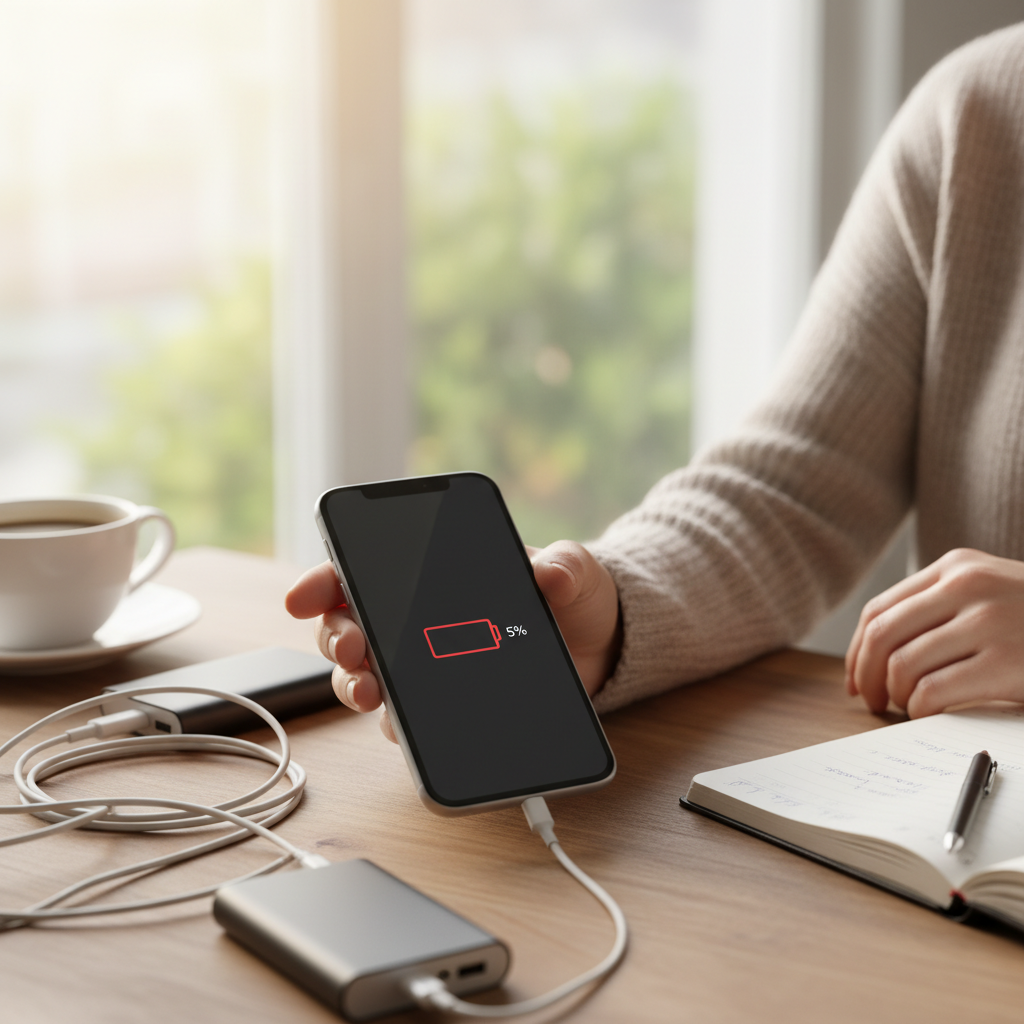
This isn’t about some fancy new gadget. It’s about something we *all* deal with: **Smartphone battery life.** And the good news is, you’re not powerless. Let’s break down why your battery might be draining faster than you’d like, and what you can *actually* do about it.
The Usual Suspects: What’s Eating Your Battery?
First, let’s look at the common culprits. Understanding these will help you take control.
* **Screen Brightness:** This is a big one. The brighter your screen, the more juice it guzzles.
* **Background Apps:** Apps running in the background, even when you’re not actively using them, can be significant battery drains. They’re constantly checking for updates, syncing data, and sending notifications.
* **Location Services:** Apps that use your location (maps, weather apps, etc.) can be power-hungry.
* **Push Notifications:** Each notification, alert, and buzz uses a little bit of power.
* **Wireless Connections:** Wi-Fi, Bluetooth, and cellular data all require energy to stay connected.
* **Outdated Software:** Running an old version of your phone’s operating system or apps can lead to battery drain issues. Updates often include battery optimizations.
* **Extreme Temperatures:** Batteries don’t like extreme heat or cold.
How Your Phone’s Battery *Actually* Works (Simplified)
Understanding a little about how your phone’s battery *actually* works can help you make better decisions. Modern smartphones use lithium-ion batteries. These batteries store energy chemically, and they’re designed to be recharged repeatedly.
A few key points:
* **Charging Cycles:** Each time you fully charge and discharge your battery is a “cycle.” Over time, the battery’s capacity degrades with each cycle.
* **Heat is the Enemy:** Heat is a major factor in battery degradation. That’s why you want to avoid leaving your phone in direct sunlight or in a hot car.
* **Smart Charging:** Modern phones have smart charging technology. They stop charging when they reach 100% and prevent overcharging.
The Daily Mistakes We *All* Make
Now, let’s talk about the everyday habits that might be hurting your phone’s battery life.
* **Leaving Brightness Maxed Out:** We’ve all done it—crank up the brightness to see the screen in bright sunlight, then forget to turn it back down.
* **Ignoring Background App Activity:** Letting apps run wild in the background is a recipe for battery drain.
* **Over-Reliance on Location Services:** Do you *really* need location services turned on for *every* app? Probably not.
* **Charging to 100% Every Time:** While it won’t *damage* your phone, constantly charging to 100% *can* contribute to long-term wear and tear.
* **Using Your Phone While Charging:** This can cause your phone to heat up, which isn’t good for the battery.
Practical Usage Tips: What You Can Do *Right Now*
Here’s a straightforward action plan to improve your phone’s battery life, based on what we’ve covered:
* **Adjust Your Screen Brightness:** Lower the brightness, or, even better, enable auto-brightness.
* **Manage Background Apps:** Close apps you’re not using, or adjust your phone’s settings to limit background activity.
* **Control Location Services:** Review which apps have access to your location, and restrict access for apps that don’t need it.
* **Limit Push Notifications:** Turn off notifications for apps that aren’t essential.
* **Use Wi-Fi When Possible:** Wi-Fi generally uses less power than cellular data.
* **Enable Power-Saving Mode:** Use your phone’s built-in power-saving mode, especially when your battery is low.
* **Keep Your Software Updated:** Install the latest updates for your phone’s operating system and apps.
* **Avoid Extreme Temperatures:** Don’t leave your phone in direct sunlight, a hot car, or freezing temperatures.
* **Charge Strategically:** Try to keep your battery between 20% and 80% if possible.
* **Use the Right Charger:** Use the charger that came with your phone, or a certified charger. You can also see The Unsung Hero: Keeping Your Refrigerator Running Smoothly for more tips on how to keep your devices in good condition.
Myths vs. Reality: Debunking Common Battery Beliefs
Let’s clear up some common misconceptions:
* **Myth:** You should always let your battery drain completely before recharging. **Reality:** False! This was true for older battery types, but modern lithium-ion batteries prefer to be charged frequently.
* **Myth:** Leaving your phone plugged in overnight damages the battery. **Reality:** Modern smartphones are smart and stop charging when they reach 100%.
* **Myth:** Closing all your apps saves a lot of battery. **Reality:** Not really. Modern phones are designed to manage background apps efficiently.
* **Myth:** Using third-party chargers will ruin your battery. **Reality:** Not necessarily. Using reputable, certified chargers is generally safe.
* **Myth:** Fast charging always harms your battery. **Reality:** Modern phones are designed to handle fast charging, although it can generate more heat.
Long-Term Habits for a Better Battery Life
Beyond the quick fixes, here are some long-term habits to cultivate:
* **Regularly Monitor Battery Usage:** Check your phone’s battery settings to see which apps are using the most power.
* **Clean Your Phone’s Charging Port:** Dust and debris can interfere with charging.
* **Consider a Battery Replacement:** If your battery is old and struggling, a replacement might be the best option.
FAQ: Your Burning Battery Questions Answered
Let’s address some of the most common questions:
**1. Should I charge my phone overnight?**
Yes, it’s generally fine. Modern phones have smart charging that prevents overcharging.
**2. How often should I charge my phone?**
Charge your phone when it reaches around 30%. You can charge it whenever convenient.
**3. Is it okay to use my phone while it’s charging?**
Yes, it’s safe if you’re using a safe charger. But, it might charge slower.
**4. Does fast charging damage my battery?**
Not necessarily. Modern phones are built to handle fast charging, although it can generate more heat. Use it when you need a quick top-up.
**5. How can I tell if my phone’s battery is bad?**
If your phone drains very quickly, shuts down unexpectedly, or the battery health indicator in your settings shows a low percentage, it might be time for a replacement.
**6. Should I let my phone die before charging?**
No! That’s an outdated practice. Charge your phone whenever it’s convenient.
**7. What is the ideal percentage to charge your phone to?**
To maximize battery lifespan, aim to charge your phone to 80%.
**8. Will closing apps save battery?**
Closing apps doesn’t save a significant amount of battery life, as the phone is designed to manage background apps.
Final Thoughts: Your Battery, Your Rules
Your phone’s battery is a crucial part of your daily life. By understanding how it works, avoiding common mistakes, and adopting smart habits, you can significantly extend your battery life and reduce the frustration of a dead phone. It’s about finding the balance that works for *you*. Use these tips as a starting point, experiment, and find what helps *your* phone stay juiced up longer. Remember to also check out for more tech-related information.